


is a journalist and philosopher of technology with degrees from France’s École Normale Supérieure in Lyon and HEC-Paris, where she specialised in innovation and media, before joining Philonomist’s editorial team.
Picture: © CP

Dear reader,
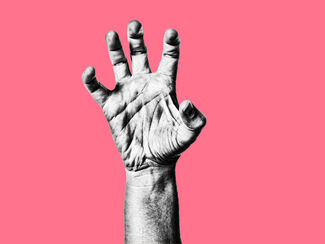
The summer is over, it’s back to work! Some take up yoga, others get a new haircut, and me, well… I get eczema. Just a few weeks after feeling perfectly calm, I now find myself – emotionally and physically – irritated for nothing. Saying hello feels like an effort, writing a polite email makes me cringe, the noise of my computer keys annoys me, and sometimes even my own ideas make my eyes roll… And while there are cortisone ointments to relieve the eczema, I can’t think of anything to slather on my colleagues, my computer, or my own brain. The advice I glean from the Internet (“count to ten”, “take a deep breath”) is all useless to me, and no article on managing one’s emotions seems to address my concerns. It’s like an itch that won’t go away. While most people come back relaxed from their summer break, those weeks without friction have obviously made me more sensitive to it. Like the princess with a pea under her mattress, I get irritated over trifles, because I’ve lost the habit of sharing my time and my space.
There’s something paradoxical about my mental state: in general, human beings seek to either escape situations of discomfort or resolve them – when we hurt ourselves, we try to heal – whereas my irritation only seems to call for its own self-perpetuation. Like a child scratching until it bleeds, I can see that I’m not really looking to get better. On the contrary, I’m even causing my own discomfort, for the pleasure of falling back into it. At the café, for example: instead of putting on headphones or changing seats, I continue to listen to the people talking nonsense at the table next to mine. And so I indulge in a kind of masochistic pleasure, without purpose or enjoyment, which Socrates already mentioned in Plato’s Gorgias, with scathing irony: “First of all, tell me whether a man who has an itch and wants to scratch, and may scratch in all freedom, can pass his life happily in continual scratching.” The objects of my irritation are vague, and basically interchangeable. If I hadn’t been annoyed by that email, my ire would undoubtedly turn to the office temperature or the sound of chit-chat coming from the hallway. And to make matters worse, I even get irritated by my own irritation!
‘Where anger or indignation forge solidarity and therefore long-term changes, irritation is an apolitical and antisocial passion’
Am I being dramatic? Maybe. But there’s more to it than that. Because in addition to being superficial and dangerous for morale, this irritability can jeopardise the team spirit. Where anger or indignation forge solidarity and therefore long-term changes, irritation is an apolitical and antisocial passion. It’s unsalvageable, and therefore unanimously condemned by the thinkers of Antiquity. In his Nicomachean Ethics, Aristotle explains that it’s just a disordered form of a more noble anger; and it lacks anger’s primitive force, which manifests itself in an emotional or physical outburst – a scream, a kick in a door, a smashed plate... The irate doesn’t even think of taking action or voicing their all too superficial grievances. To a colleague who notices us sighing, we say “don’t worry, it’s nothing.” Because it’s not the content of the email that irks us, but its wording; not the sentence, but the tone of voice. In short, anger brings us fire and togetherness; irritation is just a solitary itch.
Debilitating, unnerving, isolating… Irritation is also the symptom of a sensitivity to the world around us. For many of us, it’s therefore part of our daily life, especially when we return from vacation (like me) or when tiredness sets in. And there are basically only two solutions: contain it, or blunt it. And so Nietzsche opposed two figures of ancient morality: “The Epicurean seeks out the situation, the persons, and even the events that suit his extremely sensitive intellectual constitution,” he writes in The Gay Science (1882). “He forgoes the rest – that is, almost everything – because it would be too strong and heavy a diet. The Stoic, by contrast, trains himself to swallow stones and worms, glass shards and scorpions without nausea.”
But don’t be too fast to judge those frail Epicureans who shut themselves off. If they seek to preserve their “subtle sensitivity”, maybe it’s because it’s precious. While the Stoic, hardened by thick skin and “porcupine spines”, as Nietzsche puts it, “wants his stomach to be ultimately insensible to everything the chance of existence pours into him.” But what allows them to be resilient might also make them less curious and attentive to changes in their environment. This is why, in Twilight of the Idols (1888), Nietzsche describes irritability as a state necessary for the production of any work, because the creator’s “whole emotional system is irritated and amplified.” Like a radio antenna connected to all the frequencies in the world, the irate could be highly receptive – and, who knows, more creative too!
Apolline Guillot
Picture © iStockphoto
